
HIV Knowledge
HIV Testing
A complete guide to HIV testing — why test, when results are reliable, the window period, test types, privacy, reading results, and next steps.
Introduction
HIV testing is a key step to knowing your status clearly. Whether the result is negative or positive, finding out early lets you act right away — with prevention, treatment, or open conversations with partners. Many people delay testing because they fear the result, stigma, or believe that no symptoms means no need to test. In reality, HIV can stay silent for years, and testing is the only way to know for sure. For basics on the virus and transmission, see HIV and AIDS in our knowledge hub.
Today there are several test types, from rapid kits that give results in minutes to detailed laboratory assays. Each has a different window period — the time after infection when a test may still be negative. Understanding this helps you choose when to test and interpret results correctly, without assuming a very early negative result rules out infection. This page summarizes guidance from international and Thai public health sources so you can make informed choices before visiting a clinic.
HIV testing is not something to be ashamed of; it is responsible sexual health care. Whether you have one partner or several, use condoms consistently or not, or have just had a possible exposure, regular testing helps keep you and others safer. For booking, privacy, or cost questions, see our FAQ or contact page. All knowledge topics are listed at HIV Knowledge.
In Thailand, HIV testing is available through public hospitals, private clinics, and community outreach. Many sites offer non-judgmental care. Preparation is usually simple — most tests do not require fasting, but be honest about medicines, pregnancy, and recent risk.
HIV testing fits into broader sexual health. Consider it alongside STI screening, prevention, and treatment planning. Knowing what to expect reduces anxiety and helps you ask better questions.
Why get tested for HIV
HIV testing gives a clear answer about your infection status at the time of testing — the foundation for health decisions. A negative result supports ongoing prevention such as condoms, PrEP, or STI screening, as described on HIV Prevention. A positive result allows early HIV Treatment, reducing serious illness, restoring immunity, and lowering transmission when viral load becomes undetectable on treatment.
Benefits of knowing your status early
- Start antiretroviral therapy (ART) before severe immune damage, supporting a long, good-quality life.
- Reduce anxiety about unknowingly transmitting HIV and help partners access testing or prevention.
- Plan sexual health systematically, including STI screening often needed alongside HIV risk.
- Ease uncertainty and access mental health support when needed.
Consider testing if you have had condomless sex, new or multiple partners, shared injection equipment, are pregnant or planning pregnancy, or have had STIs — especially those with sores or inflammation. Test even without symptoms if your behavior involves risk. Every 3–6 months, or at least yearly, is a common interval for ongoing risk, adjusted to your clinician’s advice.
Choosing to test matters — whatever the result, knowing your status beats guessing. If you are not ready, read HIV basics first, then pick a convenient time.
When is an HIV test accurate?
HIV test accuracy depends on two main factors: the type of assay and time since your last possible exposure. After infection, the body needs time to produce antibodies or reach detectable viral levels. Testing too early can yield a false negative during the window period. The most reliable timing therefore depends on the specific test used, not a single rule-of-thumb number of days.
General timing guidance
- After a recent exposure, seek advice promptly — especially for PEP within 72 hours if indicated.
- Modern 4th-generation antigen/antibody tests usually detect infection sooner than antibody-only tests.
- An early negative result after exposure should be followed up after the test’s window period — one negative test is not always definitive.
- People with ongoing risk should test regularly even after previous negative results.
Timing decisions should not rely on general web information alone. Trained staff will ask about your risk, last exposure date, available test types, and follow-up plans. If you are unsure when to test or need PEP guidance after exposure, see HIV Prevention or related articles.
After a recent exposure, do not wait on guesswork alone — some situations need PEP before a test can turn positive. Calling a clinic promptly often helps.
The window period
The window period is the time after HIV infection when tests may still be negative even though infection has occurred. The virus can still be transmitted during this time, so a single early negative result does not prove absence of infection. Window length depends on the assay: 4th-generation antigen/antibody tests usually have shorter windows than antibody-only tests, while nucleic acid tests (NAT) often detect infection earliest but are used in specific situations such as confirmation or high-risk scenarios.
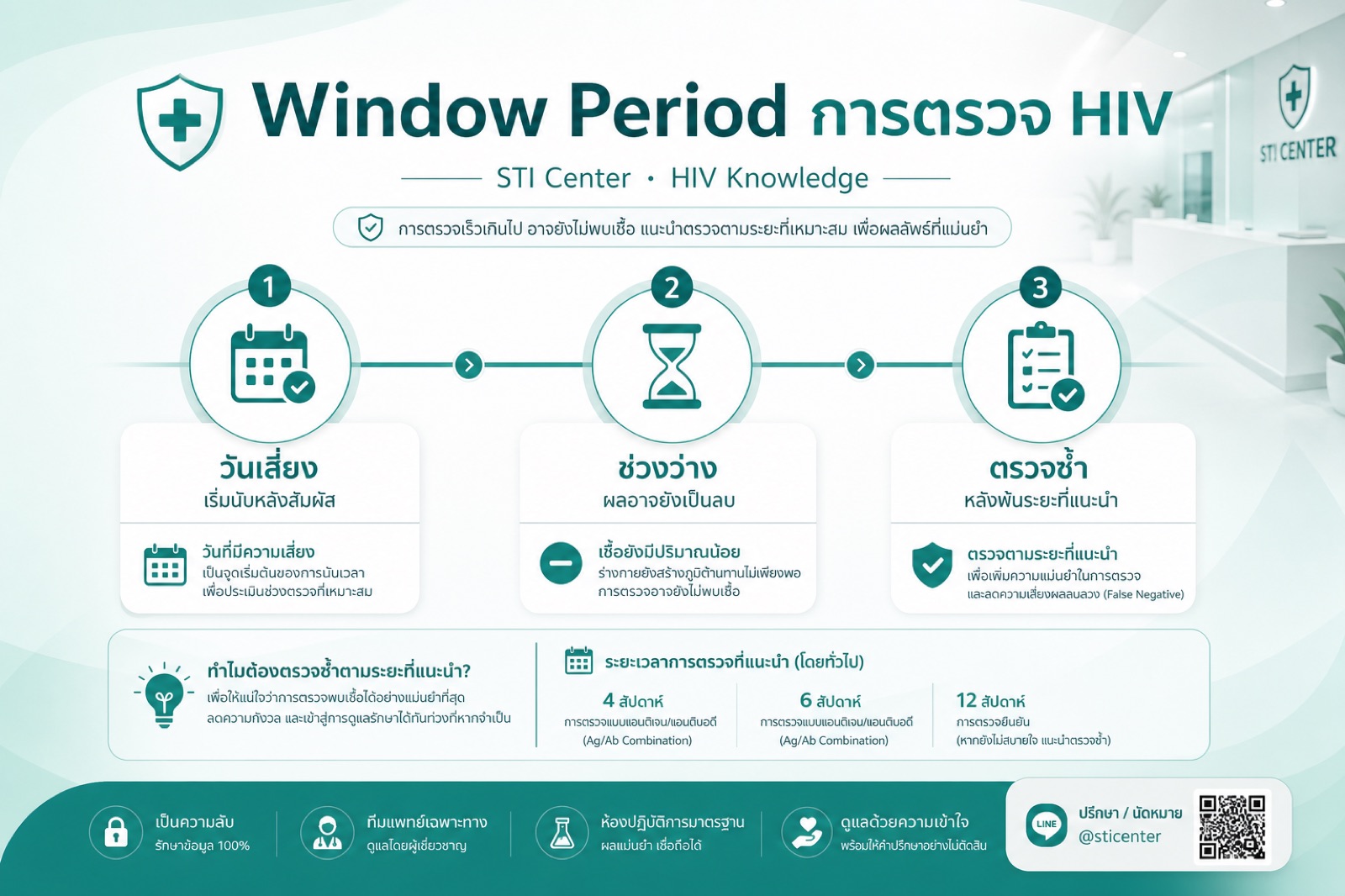
Test types and approximate window periods
| Test type | What it detects | Approximate window | Notes |
|---|---|---|---|
| NAT / HIV RNA | HIV genetic material | About 10–33 days | Laboratory use; not usually first-line screening |
| 4th gen Ag/Ab (lab) | p24 antigen + antibodies | About 18–45 days | Standard in many clinics and hospitals |
| Rapid Ag/Ab or Rapid Ab | Antibodies (some include antigen) | About 3 weeks – 3 months | Quick community screening |
| Self-test | Antibodies (kit-dependent) | Kit-dependent | Preliminary positives need confirmation at a clinic |
If you recently had a risk and your first result is negative, staff usually advise retesting after that assay’s window period — or at 3 months for antibody-only tests. While waiting, avoid behaviors that could transmit HIV or use condoms consistently. Understanding the window period prevents mistaking an early negative for definitive proof of no infection.
Understanding the window period prevents misreading early negatives. Note your last exposure date when testing so staff can advise retesting accurately.
Types of HIV tests
HIV testing today ranges from rapid community screening to detailed laboratory assays with confirmatory steps. The choice depends on clinic resources, time since exposure, need for quick results, and whether you need formal documentation. Any appropriate test should include pre- and post-test counseling so you understand what results mean and what to do next.
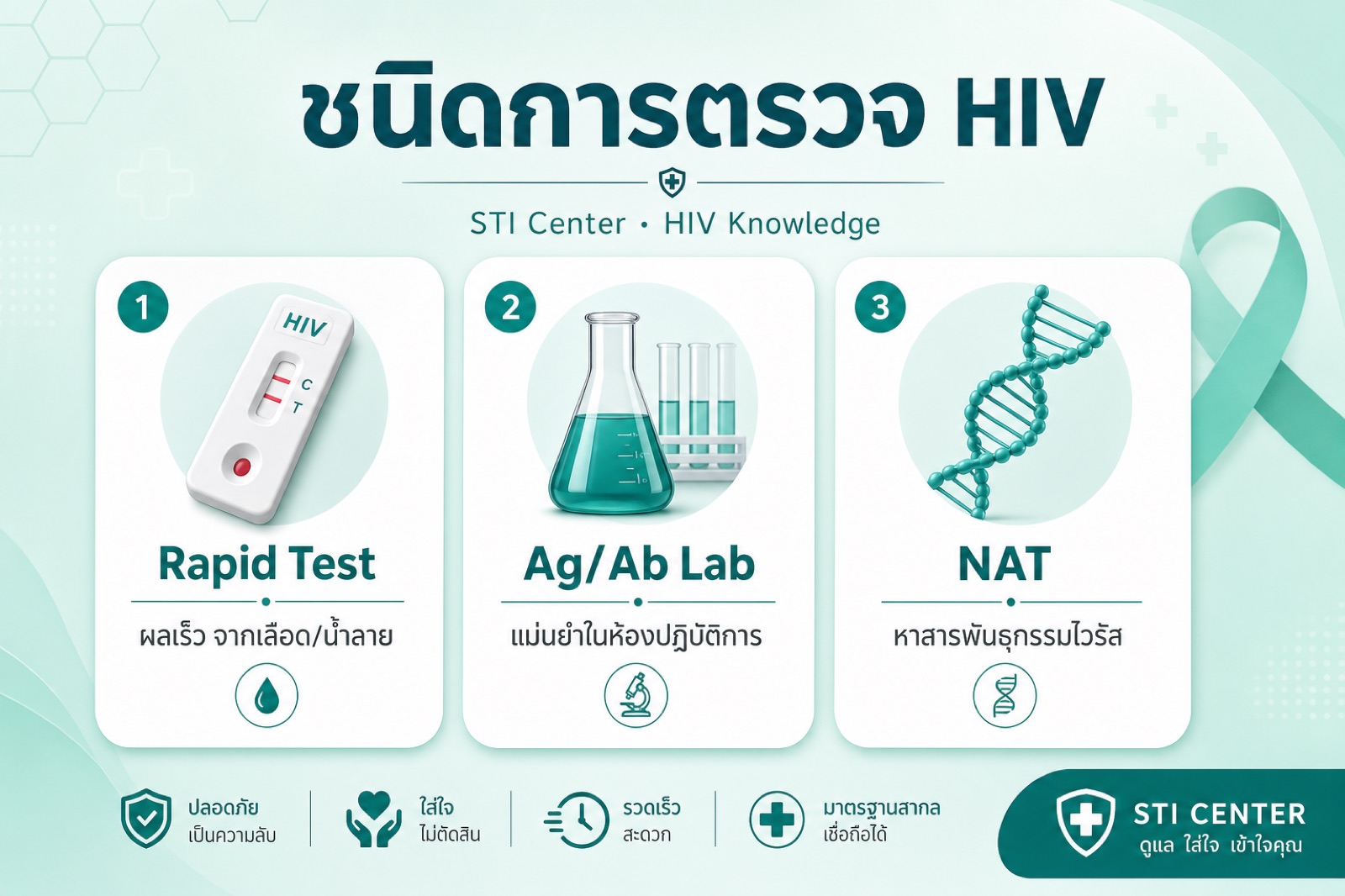
Rapid tests
Rapid tests use finger-stick blood or oral fluid and give preliminary results in about 20–30 minutes. They suit clinic screening, outreach, and community sites. Preliminary positives require confirmatory testing per standard algorithms — a rapid test alone is not a final diagnosis.
Laboratory tests
4th-generation antigen/antibody laboratory assays are central to many screening programs, with high sensitivity and specificity. Results may take hours to 1–2 days depending on the lab. Screening positives trigger confirmatory testing such as supplemental immunoassays or nucleic acid testing per local protocols.
Self-testing
- Improves access for those who cannot easily visit clinics — follow kit instructions carefully.
- Any self-test positive must be confirmed with counseling at a health facility promptly.
- Interpret negative self-test results using the kit’s window period; retest with ongoing risk.
- Dispose of kits and waste per instructions for safety and privacy.
Each test type has strengths — rapid for speed, lab for detail. Positive screens need standard confirmation; preliminary results are not final diagnoses.
Anonymous and confidential testing
Privacy concerns are a major reason people avoid HIV testing. Standard services follow medical confidentiality: test information is stored in health records accessible only to relevant staff. Confidential testing records your identity for medical processes but does not disclose results to outsiders without consent. Some sites offer anonymous testing with a code instead of your full name — ask each location about its policy in advance.
Your rights and questions to ask before testing
- Ask how results are recorded, who can access them, and when reporting is legally required.
- Ask about pre- and post-test counseling, especially if the result is positive.
- Ask about cost, required documents, and whether appointments can be booked in advance.
- If you fear discrimination, choose a trusted service or contact us via contact for partner clinic information.
In Thailand, the Department of Disease Control and many health agencies promote accessible HIV testing that respects client rights. Knowing your rights reduces fear and encourages testing before symptoms appear. For basic policy questions, see our FAQ or ask staff directly at the service point.
Privacy is a basic right. Ask how data is stored, who can access it, and when reporting is legally required before testing.
Understanding your results
HIV results are generally negative, reactive (preliminary positive), or occasionally indeterminate and needing repeat testing. Interpretation must account for the window period and whether this is screening or confirmation. Do not self-diagnose from kits or internet information without professional explanation — confirmatory steps and referral pathways matter for an accurate diagnosis.
What main results mean
| Result | General meaning | Next steps |
|---|---|---|
| Non-reactive (negative) | No evidence of infection within the test window | Continue prevention; retest if still in window or with ongoing risk |
| Reactive (preliminary positive) | Possible HIV infection — not a final diagnosis | Confirmatory testing and counseling promptly |
| Indeterminate | Cannot conclude from one result | Repeat testing per clinic protocol |
A negative result does not remove future risk — test regularly and use prevention if your behavior involves risk. A preliminary positive can be frightening, but modern HIV treatment is highly effective; early care supports good health and reduces transmission. See HIV Treatment for an overview, and seek mental health support if you need it.
A negative result does not guarantee the future. Keep preventing and retest as advised if risk continues. A preliminary positive is not the end — treatment works well today.
What to do after testing
What to do after testing depends on your result and situation, but the key is not to stop caring for your health once you have a result. Whether negative or positive, clear next steps keep you safer and improve quality of life. HIV testing is a starting point, not an endpoint — follow-up, prevention, or ongoing treatment build long-term confidence.
If your result is negative
- Keep preventing: use condoms; consider PrEP for ongoing risk — see Prevention.
- Retest as advised if you recently had exposure or are still in the window period.
- Screen for STIs too — some are silent but raise HIV risk.
- Plan regular testing every 3–6 months or as advised if risk continues.
If your result is positive (after confirmation)
- Enter care promptly; start ART as prescribed and monitor viral load / CD4.
- Receive counseling on partner notification when you are ready, per clinic guidance.
- Care for mental health and know your rights at work and school — good treatment supports normal life.
- Read more about U=U and daily life in HIV Treatment and our articles.
Whatever your result, trusted information and understanding services reduce isolation. For help booking tests or finding nearby clinics, visit contact or explore other topics at HIV Knowledge to connect prevention, treatment, and STI information.
After testing, follow staff guidance on retesting, treatment, or prevention changes. Follow-up is part of care, not a nuisance.
Summary
HIV testing is one of the most important sexual health decisions you can make. Understanding why to test, when results are reliable, the window period, test types, privacy, and how to read results helps you seek care confidently and interpret outcomes correctly. Whether negative or positive, knowing your status is the start of better care — not an ending.
If you have never tested, or have had a possible exposure, do not wait for symptoms. Start with accurate information, then contact a service or book a test today. Looking after your health is something everyone can do — and something to be proud of.
Whatever your result, testing starts better care. If unsure, begin with HIV and AIDS, then book a test when ready.