
HIV Knowledge
HIV and AIDS
Understand HIV and AIDS, how they differ, transmission routes, symptoms by stage, common myths, and when to test or start treatment.
Introduction
HIV (Human Immunodeficiency Virus) is a virus that attacks the immune system, especially CD4 cells — white blood cells that help the body fight infections. After infection, the body tries to control the virus, but without treatment viral levels rise and CD4 counts fall, making it harder to fight infections and certain cancers. HIV is not currently curable, but antiretroviral therapy (ART) can control it effectively so people live long, healthy lives.
AIDS (Acquired Immunodeficiency Syndrome) is not the name of a virus. It is a serious stage of untreated HIV when the immune system is severely weakened and opportunistic infections or certain cancers can occur. Early diagnosis and consistent treatment help many people never progress to AIDS.
This page covers essential facts about HIV and AIDS: how they differ, how HIV spreads, what does not transmit it, symptoms by stage, common myths, and when to test or start care. For more detail, see our pages on HIV testing, prevention, treatment, or browse our FAQ.
In Thailand, access to confidential HIV testing and treatment has advanced in both public and private settings. Ask about privacy policies before testing. Accurate information from the start supports prevention, safer sex, and partner communication — whether you are new to HIV or supporting someone you care about.
Understanding HIV starts by separating the virus from disease stage, and real transmission from imagined fear. Clear information often reduces anxiety and enables next steps — booking a test, talking with partners, or learning suitable prevention. Whatever your situation, knowing options and expert support exist makes decisions easier.
Reading this full page takes a few minutes but gives you a clear framework for health decisions — first testing, counseling after risk, or supporting someone close. Accurate information is the strongest tool against fear and stigma. Revisiting when new questions arise is normal and helpful.
What is HIV and what is AIDS?
HIV is a virus that directly damages the immune system. After infection, the virus uses the body's cells to replicate, gradually lowering CD4 counts. People with HIV may have no clear symptoms at first, or brief flu-like illness that resolves — but the virus remains and can be passed to others unless treatment suppresses viral load. Only testing confirms status; symptoms alone are not reliable. In Thailand, many people with HIV receive treatment and live well. Understanding HIV as a manageable condition reduces fear and encourages timely care.
HIV and AIDS are often used interchangeably in everyday speech, but medically they differ. Using the terms correctly helps communication with clinicians and health information, especially regarding diagnosis, treatment, and rights at work or school. People with treated HIV often never meet AIDS criteria.
AIDS is a condition caused by untreated HIV, not a separate virus
AIDS develops when the immune system is so weak that opportunistic illnesses occur. Clinicians diagnose AIDS when CD4 falls below a defined threshold or when certain AIDS-defining conditions appear. Having HIV does not mean having AIDS right away. Many people who start treatment early and stay adherent never reach this stage.
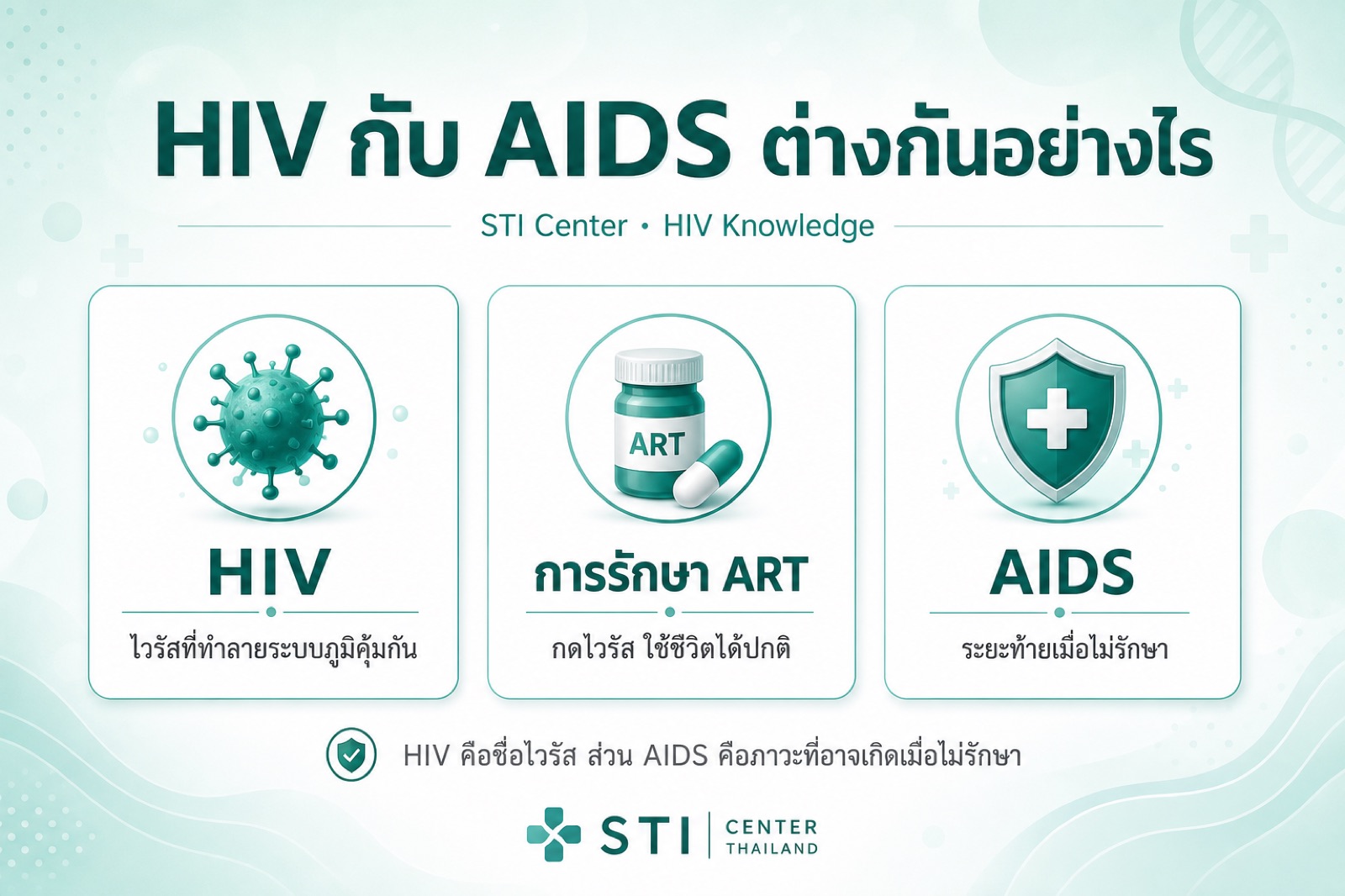
Key differences between HIV and AIDS
| Topic | HIV | AIDS |
|---|---|---|
| Definition | Virus that attacks immunity | Advanced stage/condition of untreated HIV |
| Diagnosis | Virus or antibodies detected in blood | Low CD4 or AIDS-defining illness |
| Symptoms | Often none or brief acute illness | Often opportunistic illnesses present |
| Treatment | ART can control the virus | ART is essential and can restore immunity |
| Transmission | Possible if untreated; U=U when undetectable | Risk depends on viral control |
Understanding this difference reduces unnecessary fear and stigma. With proper care, people with HIV can work, study, raise families, and live full lives. For long-term care, see our treatment page or articles from STI Center.
CD4 and viral load are key measures in HIV care. CD4 reflects immune strength — lower counts mean higher opportunistic infection risk. Viral load is the amount of virus in blood; treatment aims for undetectable levels. Regular monitoring helps clinicians assess whether regimens work or need adjustment. Newly diagnosed people may find these terms unfamiliar, but care teams explain them step by step.
Talking about HIV status with partners is an important skill. Open conversation when you are ready supports shared prevention — condoms, PrEP, or regular testing. If a partner is virally suppressed, U=U means no sexual HIV transmission, but other STI prevention still matters. This knowledge builds safer, respectful relationships.
Thailand's HIV response shows that public health action can greatly reduce transmission and deaths — expanded testing, subsidized treatment, mother-to-child prevention, and PrEP in key populations. HIV is a condition society can manage together; basic knowledge helps everyone care for themselves and others.
"Immunodeficiency" sounds alarming but medically means the immune system is not fully effective — a gradual process over years without treatment, not immediate after infection. Early ART helps CD4 recover and prevents complications, so regular testing matters even when you feel well.
Modern ART is often once daily with fewer side effects than in the past. Taking doses on time is essential; frequent missed doses can lead to resistance. Pill boxes, phone reminders, and clinician support help adherence. Knowing this before starting treatment sets realistic expectations.
Some people live with HIV for years without symptoms and learn their status only at first testing — a turning point. Even with a positive result, starting care restores immunity and reduces transmission risk. It is never too late to enter care.
Distinguishing "infection" from "illness" reduces confusion. Well-treated people may be healthy and not sexually transmit HIV when undetectable. Precise language with clinicians and others supports respect and daily stigma reduction.
"Cure" and "control" mean very different things. HIV today is manageable: consistent ART, follow-up, and holistic care support high quality of life and no sexual transmission when undetectable. That distinction enables realistic hope, not groundless fear.
Understanding HIV does not mean memorizing every medical term — it means knowing when and whom to ask, and what options exist. Bring questions to appointments; no answer today does not mean none tomorrow. Modern HIV care offers many tools for full lives.
How HIV is transmitted
HIV is transmitted when virus-containing body fluids enter another person's bloodstream or mucous membranes in sufficient quantity. Key fluids are blood, semen, vaginal fluids, rectal fluids, and breast milk. Everyday contact does not spread HIV, but certain behaviors carry higher risk, especially without protection. Unprotected anal or vaginal sex generally carries higher risk than oral sex in many cases, but any mucosal exposure to infectious fluids should be assessed.
For pregnant people with HIV, ART during pregnancy and appropriate delivery planning greatly reduce mother-to-child transmission. Thailand has highly effective prevention programs. If you are pregnant or planning pregnancy, test for HIV and consult obstetric care for safe planning for parent and child.
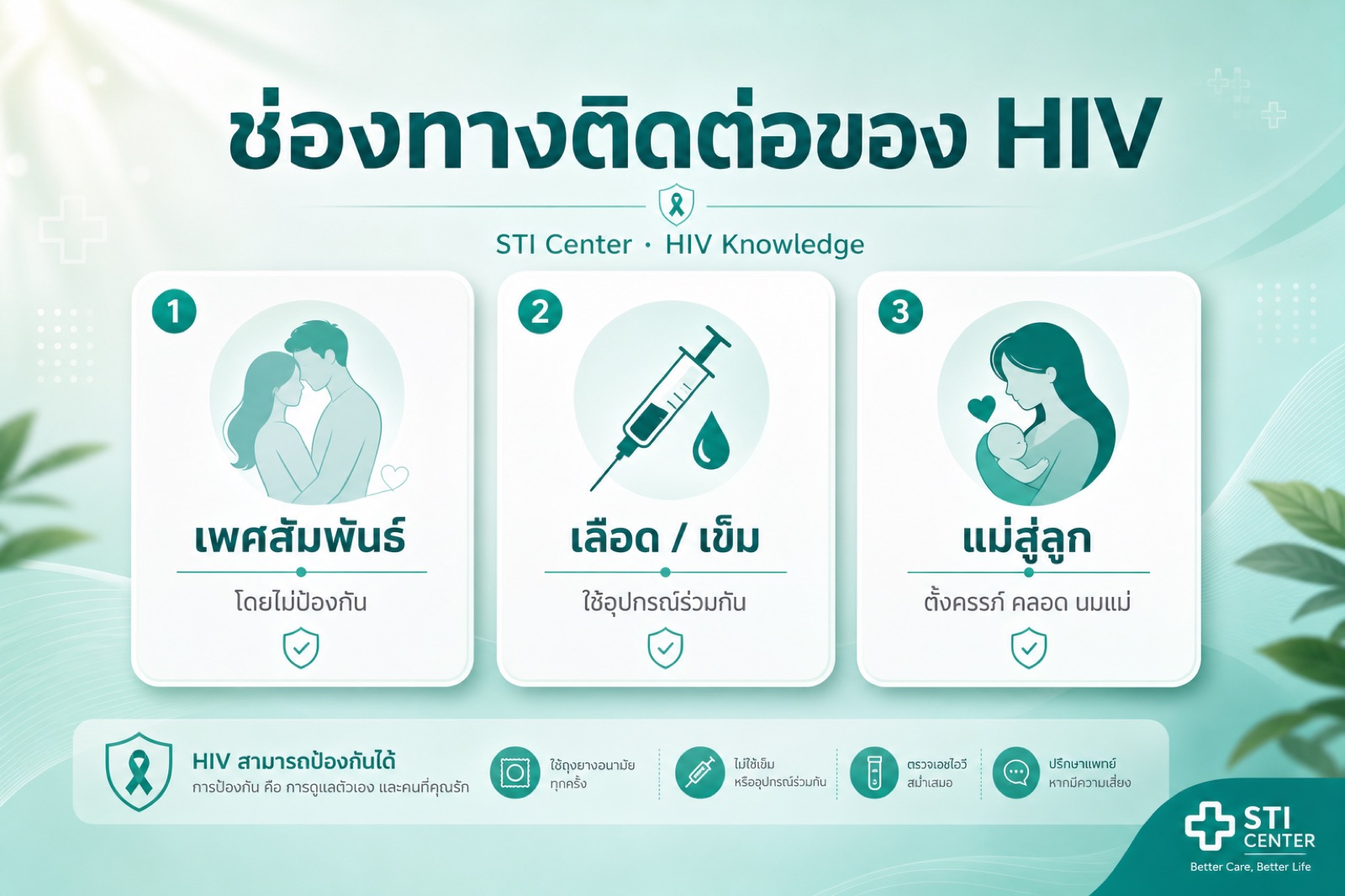
Common transmission routes
- Vaginal, anal, or oral sex without condoms, or with incorrect condom use
- Sharing needles, syringes, or other injection equipment, including drug preparation tools
- Mother-to-child transmission during pregnancy, birth, or breastfeeding without prevention or treatment
- Receiving contaminated blood, organs, or tissues (rare where blood is screened)
- Accidental needle-stick or sharp injury with blood exposure (low risk; assess and consider PEP if indicated)
Factors that increase risk
Having an STI, especially one with sores or inflammation, weakens mucosa and raises HIV risk. Multiple partners of unknown status, frequent condomless sex, and shared injection equipment also increase risk. Testing and treating STIs is part of HIV prevention.
Oral sex carries lower HIV risk than other routes in many cases, but sores, gum inflammation, or ejaculation can still allow transmission. Condoms or dental dams reduce risk. Testing and treating STIs that cause sores or inflammation also lowers HIV risk. Correct, consistent condom use remains a core foundation for everyone.
For people who inject drugs, needle exchange and sterile equipment access are evidence-based HIV prevention. Never sharing needles or preparation tools greatly reduces risk. Treatment or opioid agonist therapy supports long-term risk reduction. These services exist across Thailand with non-judgmental harm-reduction approaches.
Risk assessment considers activity type, frequency, condom use, STI status, and substance use. No one-size formula fits everyone. Sexual health counselors analyze your situation and advise on testing timing, PrEP, or PEP after specific events. Confidential counseling supports informed decisions without shame.
Blood exposure in accidents or procedures should follow standard precautions — gloves, clean wounds, medical advice for direct blood contact. These risks are generally lower than condomless sex or shared needles, but individual assessment still matters.
Compatible lubricants (water- or silicone-based) reduce condom breakage and improve comfort, supporting consistent use. Avoid oil-based lube with latex condoms. Correct size and expiry checks are basic prevention skills everyone should know.
Sex with a partner who maintains an undetectable viral load (U=U) carries no sexual HIV transmission risk. Other STI prevention and regular sexual health checks still matter. U=U reduces unnecessary fear but does not end sexual health care.
Travel or working abroad does not automatically increase HIV risk — behavior, not location, matters. Unprotected sex or shared needles carry risk anywhere. Carrying condoms and knowing where to access testing or prevention supports travel health planning.
Partner communication does not require full disclosure on day one, but as relationships grow, shared understanding of risk and prevention supports safer sex. Couples sometimes test together before new commitments — without shame or guilt.
Combining condoms, regular testing, PrEP for ongoing risk, and prompt STI treatment usually works better than one method alone. No single approach is 100% in every situation, but layered prevention greatly reduces risk. See prevention.
What does not transmit HIV
Misunderstanding transmission drives avoidance and stigma toward people with HIV, even though living, working, studying, or sharing facilities together does not spread the virus. HIV cannot survive or spread through casual contact without sufficient infectious fluid entering the body. Accurate education for families, colleagues, and communities helps reduce stigma and encourages testing and care.
At school, work, or in public, people with treated HIV in good health can participate normally. Separation is not required except when managing blood or fluid spills using standard infection control — the same rules apply to all blood and body fluids, not HIV alone.
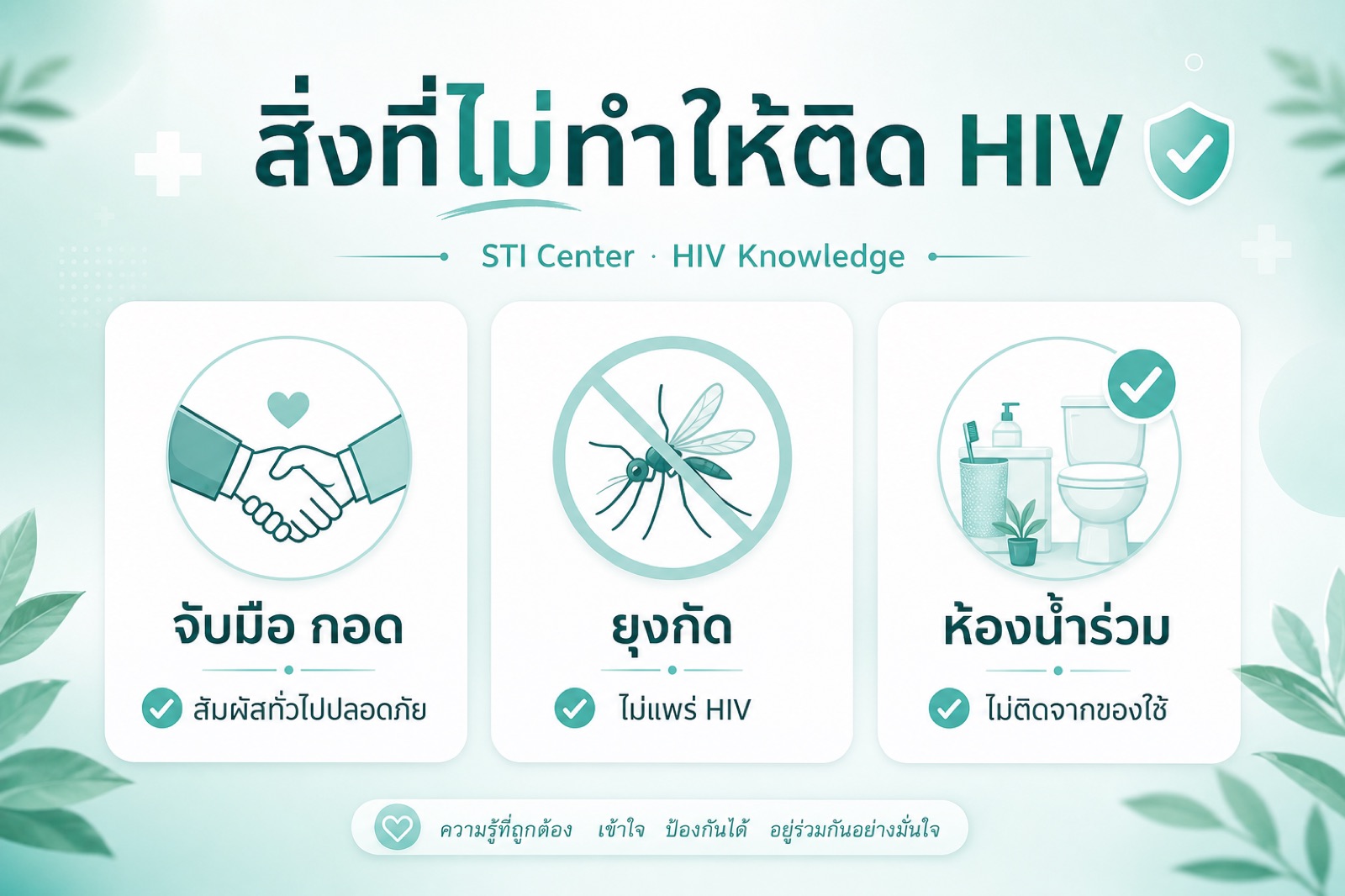
Safe activities that do not transmit HIV
- Handshakes, hugs, dry kisses, and everyday closeness
- Sharing toilets, swimming pools, or bathtubs (not including public sex)
- Sharing dishes, utensils, glasses, or kitchen items
- Mosquito or insect bites
- Contact with saliva, tears, or sweat in normal amounts (except oral sex when mouth sores are present)
- Caring for someone with HIV without direct blood contact and with standard precautions
If you are unsure whether a situation carries risk, ask a trusted clinician or public health provider rather than relying on rumors. Accurate information supports appropriate testing and prevention decisions.
In emergencies — needle-stick with possible blood exposure, or condom breakage with a partner who may have HIV — risk assessment and PEP within 72 hours may prevent infection. Do not wait for symptoms. If unsure about risk, contact a clinic or hospital immediately. Staff can advise next steps, including follow-up HIV testing at the right time.
Recommended vaccines for people with HIV — influenza, pneumococcal, and others by guideline — help prevent illness when immunity is weaker. Clinicians advise based on age, health, and CD4. Holistic care includes appointments, vaccines, not smoking, exercise, and adequate rest — not ART alone.
Families with a member who has HIV can live normally without separating dishes, utensils, or living spaces. Family support strongly affects adherence and mental health. Learning accurate information together reduces fear and opens health conversations.
Deep kissing or oral sex with open mouth sores or inflamed gums may carry low but not zero risk. If status is unknown, testing and barriers reduce worry. Understanding risk boundaries supports appropriate choices without constant fear.
Working or living alongside people with HIV requires no special measures beyond standard hygiene — hand washing, safe waste handling, gloves for blood contact. Separating people with HIV from shared activities has no scientific basis.
If you worry about a possible exposure but are unsure, some services offer confidential counseling. Expert advice clarifies whether, when, and how to test, or whether PEP applies — better than panic-driven online searches.
Schools and workplaces should teach HIV facts and non-discrimination. Learning that casual contact is safe prevents isolating peers or colleagues with HIV. Accurate HIV culture benefits everyone's mental health.
HIV education for youth should emphasize facts, respect, and appropriate prevention — not excessive fear. Young people who see testing and condoms as normal health care are more likely to seek help. Early accurate knowledge reduces long-term stigma.
If you care for someone with HIV, learning about medicines, appointments, and possible side effects helps you support them. Reminders for doses and visits matter as much as encouragement. Caring for others starts with accurate knowledge.
HIV symptoms by stage
HIV progresses through three main stages: acute infection, chronic infection, and AIDS. Many people have no clear symptoms early on or for years, so symptoms cannot confirm or rule out HIV. Testing is the only reliable way to know your status. Clinicians use CD4 counts, viral load, history, and symptoms to monitor stage and treatment response.
During acute infection, the immune response can be intense, leading some to mistake it for flu or dengue. If you had risk and these symptoms, tell your clinician honestly so the right test and timing are chosen. Early testing supports timely prevention or treatment.
Acute stage (2–4 weeks after infection)
Some people develop fever, aches, sore throat, rash, swollen lymph nodes, or flu-like illness that resolves within weeks. Viral load is very high during this period, so transmission risk is elevated with condomless sex. After recent risk and these symptoms, seek HIV testing promptly.
Chronic stage and AIDS
The chronic stage may be silent for years while the virus still damages immunity. Without treatment, CD4 falls until AIDS develops, with opportunistic infections such as certain pneumonias, chronic diarrhea, unexplained weight loss, oral lesions, or recurrent infections. Starting treatment before this stage prevents severe complications.
| Stage | Approximate timing | Common features | What to do |
|---|---|---|---|
| Acute | 2–4 weeks after infection | Fever, aches, rash, swollen nodes, flu-like | Test and seek care if you had risk |
| Chronic | Years; often no symptoms | Mild fatigue or none | Regular testing; start treatment if positive |
| AIDS | When immunity is severely weakened | Opportunistic illness, weight loss, recurrent infection | Urgent care and close follow-up |
Opportunistic illnesses in AIDS can include Pneumocystis pneumonia, tuberculosis, esophageal fungal infection, or Kaposi sarcoma in some cases. These signal urgent care needs. With timely ART, many people never experience them. Regular testing helps start treatment before immunity falls to dangerous levels.
Accurate HIV education at work, school, and in communities fosters safe, inclusive environments. Laws and policies in many settings prohibit discrimination against people with HIV who are fit to work and on treatment. Knowing your rights and support resources is part of living confidently. Seek advice if discrimination occurs.
Monitoring symptoms helps but cannot replace blood tests. Swollen nodes, rash, or chronic fatigue have many causes beyond HIV. With risk and concerning symptoms, tell your clinician for comprehensive testing including STIs.
The window period is the time after infection when tests may still be negative. Length depends on the assay; modern antigen/antibody tests shorten it. A recent exposure with a negative result may need follow-up testing as advised. See HIV testing.
Recording possible exposure dates and test dates helps clinicians assess the window period. Note date and time of events like condom breakage. Clear history supports faster, appropriate advice including PEP follow-up and retesting.
Anxiety, depression, or loneliness may occur before or after learning HIV status. Mental health is integral to HIV care, not secondary. Seek counselors or peer support when overwhelmed — it supports adherence and wellbeing.
CD4 and viral load monitoring after starting ART shows treatment response. Viral load often drops quickly at first, but ongoing adherence is essential. Do not stop when you feel well or labs improve — unsupervised stopping can rebound virus and cause resistance. See treatment.
A past negative result does not guarantee future negativity if risk continues. Retest regularly — every 3–6 months or 1–2 times yearly per behavior and clinical advice. Consistent screening enables early treatment.
Neurological symptoms or chronic fatigue have many causes beyond HIV. With risk and recurring vague symptoms, testing clarifies status. Do not wait until severe — early detection of HIV or other STIs enables timely treatment and limits spread.
Common myths about HIV
Despite abundant medical information, HIV myths persist in society, fueling fear, avoidance of testing, and stigma. Separating fact from fiction supports better health decisions and reduces unnecessary discrimination. Stigma remains a major barrier to disclosure and adherence, affecting individual health and community transmission control.
Another myth is that young or single people need not test, though risk exists at any age and relationship status. Regular testing is responsible self-care — like blood pressure or glucose checks — not proof of risky behavior. Early knowledge supports planning whether the result is negative or positive.
Common myths and the facts
- Myth: People with HIV always look sick — Fact: Many are healthy and asymptomatic on treatment.
- Myth: HIV means imminent death — Fact: Modern ART supports near-normal life expectancy with adherence.
- Myth: There is no way to prevent HIV — Fact: Condoms, PrEP, PEP, and U=U greatly reduce risk. See prevention.
- Myth: Everyone will know if you test — Fact: Confidential testing is standard under medical ethics and law.
- Myth: Sex with someone undetectable is still risky for HIV — Fact: U=U means no sexual HIV transmission, though other STIs still matter.
If questions remain, read our FAQ or speak with a trusted clinic. Reliable sources matter more than unverified social media posts.
WHO and UNAIDS confirm that ART keeps people healthy and is central to population-level prevention. Reducing stigma and ensuring access to testing and treatment are sustainable public health goals. Trusting reliable sources over social media rumors is an essential skill today.
Follow HIV medical updates from verifiable sources — WHO, CDC, UNAIDS, Thailand DDC, and professional health bodies. Avoid unproven cure claims or products marketed without research evidence. Protecting yourself from misinformation is part of health care in a fast-moving information age.
Older media often showed people with HIV as always severely ill — unlike today's reality. Knowing modern facts brings balance. Well-treated people may show no outward signs unless they choose to disclose — a personal right.
Peer and community support helps people stay in care. Non-stigmatizing language — "person living with HIV" rather than slurs — and respecting privacy build safer societies. Everyone can reduce stigma by learning and sharing accurate information.
Verify sources before sharing HIV information online. Rumors about miracle cures or rituals may stop treatment or testing. Share only WHO, CDC, UNAIDS, or DDC-backed information for an informed society.
Health, education, and community workers can reduce stigma through respectful language, accurate education, and testing access. Safer environments encourage help-seeking — benefiting public health overall.
Trusting acquaintances over clinicians may delay care. If advice contradicts medical guidance — stopping ART, unapproved products, avoiding tests — verify with clinics or trusted sources first. Protecting yourself from bad advice is responsible self-care.
Being a good ally means listening without judgment, learning accurate facts, and respecting privacy. You need not have every answer — standing beside someone and finding trusted information matters. Stigma reduction starts with accepting close contacts.
When to test and start treatment
Anyone with ongoing risk should test for HIV regularly, with or without symptoms. Risk includes condomless sex, multiple partners of unknown status, shared needles, or STIs. Initial and follow-up testing after the test window period improves accuracy. See HIV testing for details. Clinic testing is usually quick, with some sites offering same-day preliminary results.
If your result is positive, do not panic or blame yourself. Diagnosis is the start of effective care. Your team will explain results, plan ART, monitor CD4 and viral load, and offer partner notification or mental health support when you are ready. Thailand's health system supports access to treatment for many people without heavy cost.
When to get tested
- Before a new relationship or when a partner's HIV status is unknown
- After condomless sex, condom breakage, or possible blood exposure
- At least once a year with ongoing risk, or more often as advised
- During or before pregnancy (HIV screening is part of antenatal care)
- After risk with acute flu-like symptoms, even if they resolved
If the result is positive, start treatment promptly
Current guidelines recommend starting ART immediately after diagnosis, without waiting for a low CD4 count. Early treatment restores immunity, prevents serious illness, stops transmission, and supports U=U with a sustained undetectable viral load. Read treatment and book care through STI Center or partner clinics.
Sexual health decisions are personal, but you do not have to carry worry alone. Non-judgmental care teams can plan testing, prevention, and treatment around your life. For deeper reading, browse related articles.
Mental health matters as much as physical care after a test result — negative or positive. Worry, anger, or confusion are normal. Counselors, peer support, or understanding groups can restore motivation for self-care. If you are close to someone with HIV, empathy and accurate information help more than judgment or distance.
Whatever the result, post-test counseling matters. Negative results support ongoing prevention planning; positive results connect you to care, treatment, and follow-up. Do not interpret self-test kits alone without guidance. Clinic testing follows confirmatory standards for reliable results.
Long-term life planning with HIV is realistic — study, work, relationships, pregnancy, and parenting are possible with care teams. Discussing life goals helps tailor treatment and follow-up for a meaningful future, not just survival.
If you are not ready to test, start with our FAQ or articles. Health decisions need not happen in one day — but when ready, testing and counseling bring clarity and long-term relief.
Booking testing or counseling via STI Center and Love2Test eases access to care. Regular testing with risk, immediate treatment if positive, and appropriate prevention are three pillars for confident living. Expert counseling clarifies next steps for any result.
Learning about HIV is ongoing — revisit testing, prevention, treatment, and STIs whenever new questions arise. Sexual health is part of overall health; small steps today can greatly improve long-term wellbeing.
Whether you read for yourself, a partner, child, or parent, accurate information reduces fear and opens help. Next steps may include booking HIV testing, prevention counseling, or reading our articles and FAQ. STI Center offers confidential advice and booking support.
In summary, this page covers what HIV and AIDS are, how they differ, transmission and non-transmission, symptoms by stage, common myths, and when to test or treat. Use it as a foundation for better decisions. For personal support, contact STI Center or read our FAQ and articles anytime.
If you are not ready to discuss HIV with anyone, reading and noting questions before an appointment is a good start. STI Center and partner networks offer confidential support — information, testing, or care linkage. Asking for help is responsible self-care, not weakness.
Summary
HIV and AIDS are often misunderstood, but current medical facts are clear: HIV is a controllable virus; AIDS is a stage that can be prevented with early diagnosis and treatment. Transmission requires specific infectious fluids in risk situations — not everyday living together.
No symptoms does not mean no risk. Regular testing, appropriate prevention, and immediate treatment when positive are the pillars of confident health. For more questions, see our FAQ or contact STI Center for confidential support.
Understanding HIV and AIDS is society-wide knowledge — not only for people living with HIV — to support testing, treatment, and respectful coexistence. To learn more, visit HIV testing, prevention, and treatment, or book care through STI Center.
Everyone can help build an HIV-informed society by learning, sharing accurate facts, and avoiding discrimination. Sexual health is both a right and a responsibility. Start with this page, then act — book testing or discuss prevention — the most valuable step you can take today.