
HIV Knowledge
HIV Prevention
Learn how to prevent HIV with condoms, PrEP, PEP, U=U, and safer sex and injection practices — so you can choose what fits your life.
Introduction
HIV prevention is informed, responsible self-care — not fear, shame, or judging anyone's choices. New infections still happen, but we have proven tools: affordable condoms, PrEP for ongoing risk, PEP after emergencies, and U=U for people on consistent treatment. Understanding what HIV is, how it spreads, and what does not transmit it is the first step — see our HIV and AIDS overview.
No single method is 100% effective in every situation, but combining strategies (layered prevention) greatly reduces risk. Regular HIV and STI testing helps you know your status early, plan prevention, and access care if needed. If you have not tested or recently had risk, do not wait for symptoms — book through partner clinics.
This page covers condoms, daily and on-demand PrEP, PEP within 72 hours, U=U, and safer sex and injection practices. Each method has different benefits, limits, and timing. Informed choices protect you and those around you. For more answers, visit our FAQ or browse articles.
Prevention does not mean avoiding relationships — it means choosing tools that fit your life: condoms, PrEP, or U=U for couples on consistent treatment. Consistency and updating your plan when things change matter most.
PrEP and PEP access is growing in Thailand but varies by area. Ask clinics about cost, follow-up, and documents. Good prevention starts with testing, then matching tools to risk, including STI care.
Talking with partners about prevention when ready reduces misunderstandings. Confidential clinical counseling is an option if partner talks are hard. The goal is safe, confident choices — not pressure from others.
Why HIV prevention still matters
Even with excellent HIV treatment, preventing new infections still matters — for your health, peace of mind, and partners who may not know their status. People on consistent ART live long, healthy lives, yet prevention protects everyone. Good prevention starts with understanding your risk, not judging anyone's choices. Everyone deserves information and care without stigma.
Untreated STIs such as chlamydia, gonorrhea, or syphilis can raise HIV acquisition and transmission risk through inflamed mucosa and immune-cell recruitment. Testing and treating STIs is part of HIV prevention — see our STI guide. People with risk should screen regularly even without symptoms, because many STIs are silent but still transmissible.
- Lowers your risk and protects partners
- Reduces anxiety and supports life planning
- Links to testing and care when needed
- Supports U=U when one partner has HIV
Prevention starts with honest self-assessment, not judging others. Testing and treating STIs really lowers HIV risk — do not treat them as separate issues.
Layered prevention
Layered prevention means combining methods instead of relying on one alone — for example condoms every time, regular HIV and STI testing, PrEP if risk is ongoing, and PEP within 72 hours after emergencies such as condom breakage. Together they cover real-life situations better than any single tool used in isolation.
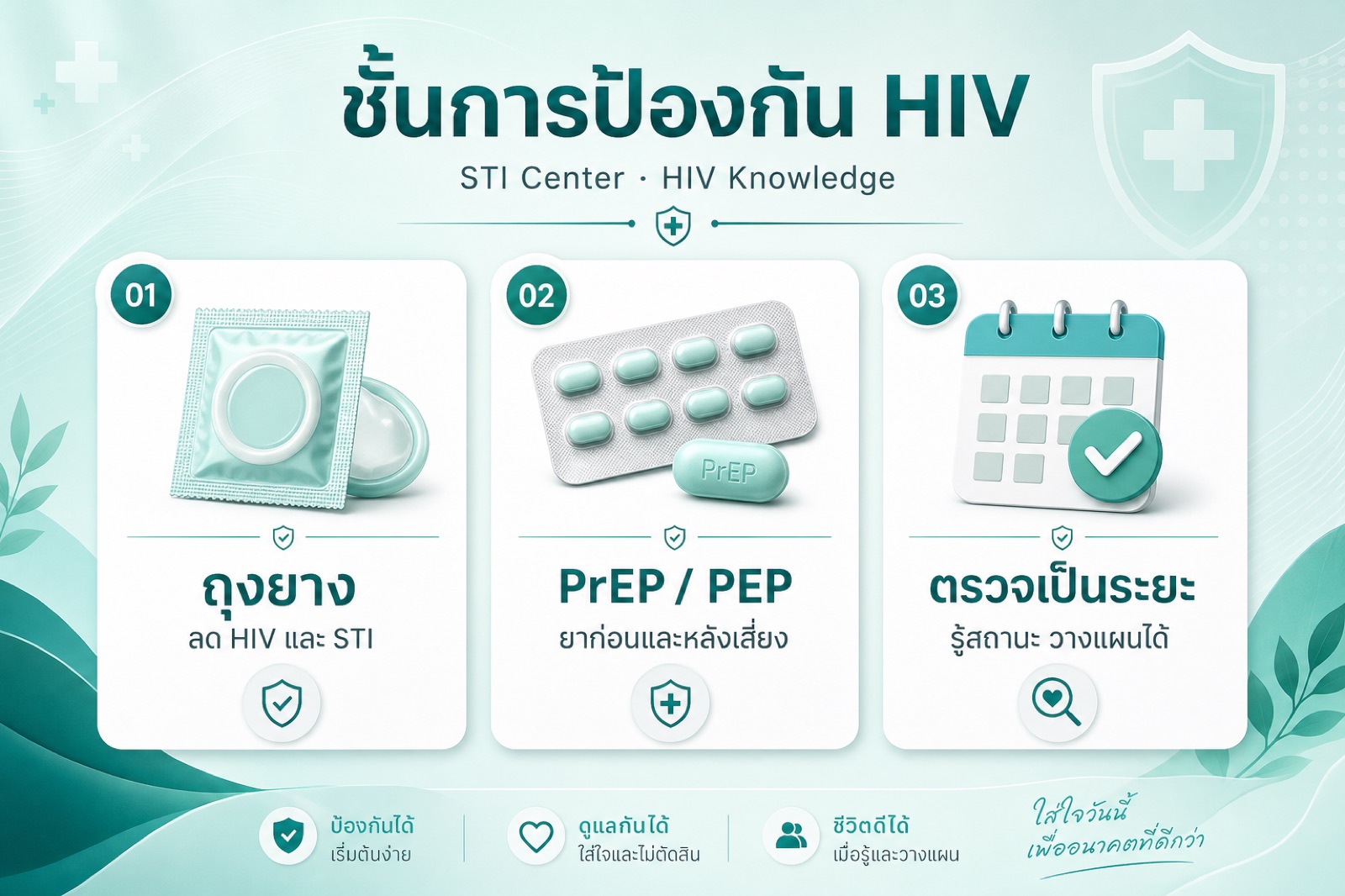
Choose what fits your life
Risk and context differ for everyone. Some people suit daily PrEP; others may use on-demand dosing under clinical guidance; others rely on condoms and testing. Talk to a trusted clinician to assess risk and plan together — kidney, liver, and behavior all affect choices. Do not copy a friend's regimen without professional advice, because what works for others may not work for you.
Layered prevention fits real life — condoms, testing, PrEP, and emergency PEP may combine over time. No single method covers every situation.
Condoms and safer sex
Condoms are affordable, widely available, and highly effective against HIV when used correctly from start to finish during vaginal, anal, or oral sex. They also prevent many STIs that PrEP does not cover, so they remain important even on PrEP. Store them cool and dry, check expiry dates, and use compatible lubricant for best results.
Using condoms correctly
- Check expiry and packaging; store cool and dry
- Put the condom on before any contact with partner fluids
- Use compatible lubricant (avoid oil-based lube with latex condoms)
- Hold the base when removing to avoid spills
- Use a new condom each time — never reuse
Safer sex also means discussing health status with partners when ready, testing before new relationships, and avoiding sex when you have open sores or genital inflammation. If a condom breaks or slips, consider PEP immediately and seek care within 72 hours — do not wait for symptoms before acting.
Condoms remain proven for reducing HIV and many STIs. Even on PrEP, correct condom skills still help.
PrEP — pre-exposure prophylaxis
PrEP is antiretroviral medicine taken before potential HIV exposure. Used correctly and consistently, it is highly effective against HIV but does not prevent other STIs such as syphilis, gonorrhea, or HPV — condoms and regular screening remain important. PrEP is not a single substitute for all prevention, but a key part of layered protection.
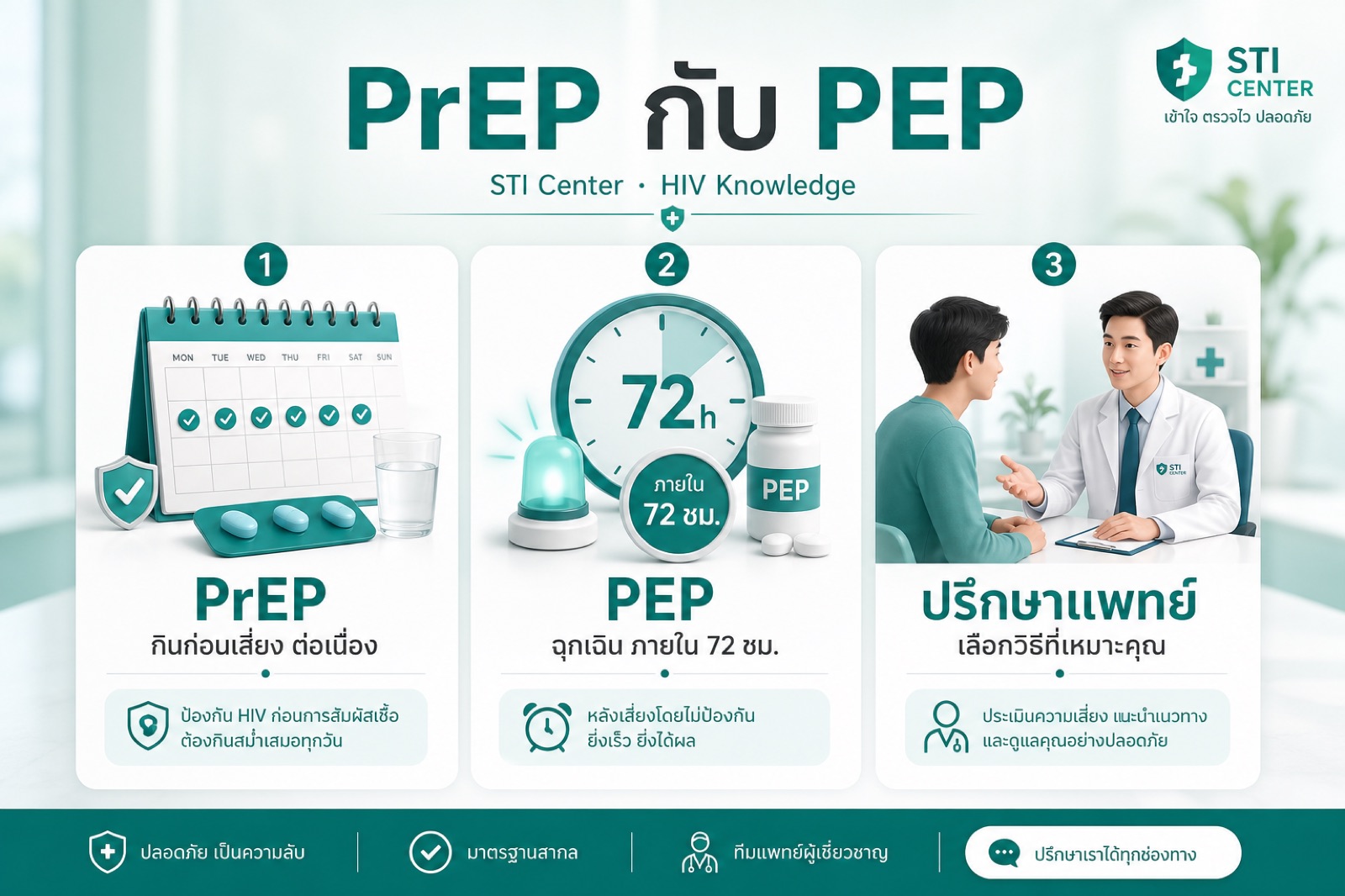
Who should consider PrEP
PrEP suits people with ongoing HIV risk — for example partners with detectable HIV or unknown status, frequent condomless sex, shared injection equipment, or other risk as advised by a clinician. Baseline HIV testing (must be negative) and kidney/liver checks are required before starting. Follow-up visits help you use PrEP safely and catch problems early.
Daily vs on-demand PrEP (2-1-1)
Daily PrEP means one pill every day as prescribed — best for steady or unpredictable risk. On-demand (2-1-1) dosing is for certain people under clinical guidance: 2 pills 2–24 hours before sex, 1 pill 24 hours after, and 1 pill 48 hours after. It suits planned condomless anal sex for eligible users but is not for everyone. Never switch regimens without consulting your clinician.
- Daily: best for ongoing risk without planning each encounter
- On-demand (2-1-1): for some people with occasional anal sex, under medical guidance
- Both require periodic kidney, liver, and HIV monitoring
- Never switch regimens without consulting your clinician
Start PrEP only after a negative HIV test and keep kidney/liver follow-up. Frequent PrEP gaps reduce effectiveness — tell your clinician if dosing is hard.
PEP — post-exposure prophylaxis within 72 hours
PEP is emergency antiretroviral medicine after possible HIV exposure — for example condom failure with a partner of unknown or positive status, condomless sex, needle-stick or blood contact with an open wound, or sexual assault. Starting PEP as soon as possible is critical. Do not wait for symptoms; early HIV is often silent.
PEP must start within 72 hours
Guidelines recommend starting PEP within 72 hours of exposure — the sooner, the better. After 72 hours, PEP may not work. Do not wait for symptoms. Contact a clinic or hospital that provides PEP immediately. PEP is usually taken for about 28 days and may cause temporary side effects such as nausea or fatigue that often improve as your body adjusts.
After PEP, follow-up HIV testing confirms your status. If risk continues, you may switch to PrEP to protect against future exposure. See our HIV testing guide for window periods and retesting, and our FAQ on PEP and PrEP for more.
PEP is emergency medicine, not a routine plan. After PEP, test as scheduled and consider PrEP if risk continues.
U=U — undetectable means untransmittable
U=U means people with HIV who take ART consistently and maintain an undetectable viral load do not sexually transmit HIV. This is backed by major research and reflects modern treatment success — reducing stigma and supporting adherence, not only preventing new infections. However, U=U does not prevent other STIs.
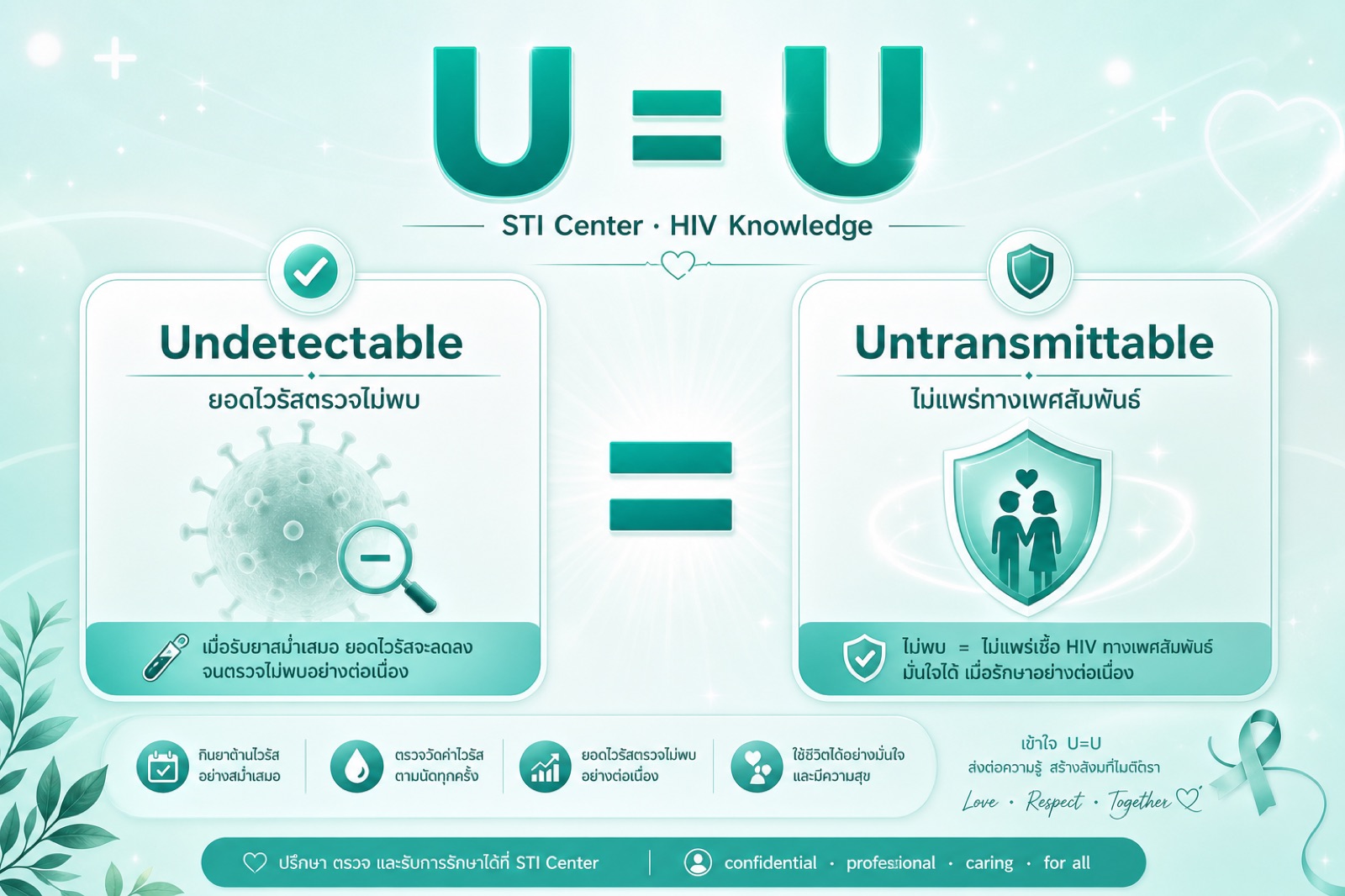
What U=U covers — and what it does not
- Covers: no sexual HIV transmission with sustained undetectable viral load
- Does not cover: other STIs — condoms and screening may still be needed
- Requires consistent ART and viral load monitoring
- If treatment stops or is missed, viral load may rebound and transmission risk returns
If you or your partner has HIV, understanding U=U supports confident planning together without fear of sexual transmission when viral load stays undetectable. Condoms and STI screening still help prevent other infections, and consistent ART remains essential. Learn more about treatment and monitoring on our HIV treatment page.
U=U stops sexual HIV transmission when undetectable is sustained, but not other STIs — condoms and STI screening still matter. See treatment.
Safer injection and drug use
HIV can spread through blood when needles, syringes, or injection equipment are shared — including cookers or spoons that may carry blood. Harm reduction protects health and lives; it is not promoting drug use but supporting people not yet ready to stop, with access to sterile supplies, testing, and non-judgmental care.
- Use new, sterile needles and equipment every time — never share
- Access needle exchange or safe sterile supplies
- Clean wounds and avoid sharing any blood-contaminated items
- Consider treatment or mental health support when ready
- Test for HIV regularly if you have ever shared injection equipment
Drug use does not mean anyone deserves HIV. Everyone deserves information, safe supplies, and non-judgmental testing. If you worry about privacy, ask about clinic policies before visiting, or read our privacy policy.
Sterile equipment every injection prevents bloodborne HIV. Harm reduction protects lives; it does not promote drug use.
Comparing HIV prevention methods
The table below summarizes main HIV prevention tools. Choose with a clinician — not from the table alone. Many people combine methods, such as PrEP plus condoms and regular testing. No single method fits every person or situation; good prevention adapts to your real life and risk.
| Method | When to use | HIV protection | Other STIs | Notes |
|---|---|---|---|---|
| Condoms | Every time you have sex | High (when used correctly) | Yes (many STIs) | Easy access; combines with other tools |
| Daily PrEP | Ongoing risk | Very high | No | HIV test before start; monitor kidneys/liver |
| On-demand PrEP (2-1-1) | Planned anal sex (eligible users) | High (in eligible groups) | No | Must follow clinical guidance |
| PEP | Within 72 h after exposure | High (sooner is better) | No | ~28 days; emergency use only |
| U=U (ART) | People with HIV on treatment | No sexual transmission | No | Requires sustained undetectable viral load |
| Sterile injection equipment | Every injection | Reduces blood-borne risk | — | Never share any equipment |
Compare options with a clinician, not by copying friends. Risk, kidney/liver health, and behavior shape safe choices.
Summary
HIV prevention today is a toolkit you can tailor — condoms, PrEP, PEP, U=U, regular testing, and safer injection each fit different situations. You do not need to learn everything at once. Start with what you can do today: get tested, learn more, or ask about PrEP.
For more help, see testing, treatment, STIs, and our FAQ, or book through Love2Test. Sexual health is a right — and good prevention starts with accurate information and equal access to care.
HIV prevention is a learnable right — start with what you can do today and adjust as life changes. Read HIV and AIDS, testing, treatment, and our FAQ.